
Ozempic vs Zepbound: Which Is Better in 2026?
SURMOUNT-5 head-to-head trial, real April 2026 pricing, insurance reality, and who should choose which — all in one place.
By The RX Index Editorial Team · Last verified April 3, 2026 · FDA labels checked · Pricing verified from official manufacturer pages · Affiliate disclosure
The key finding, upfront
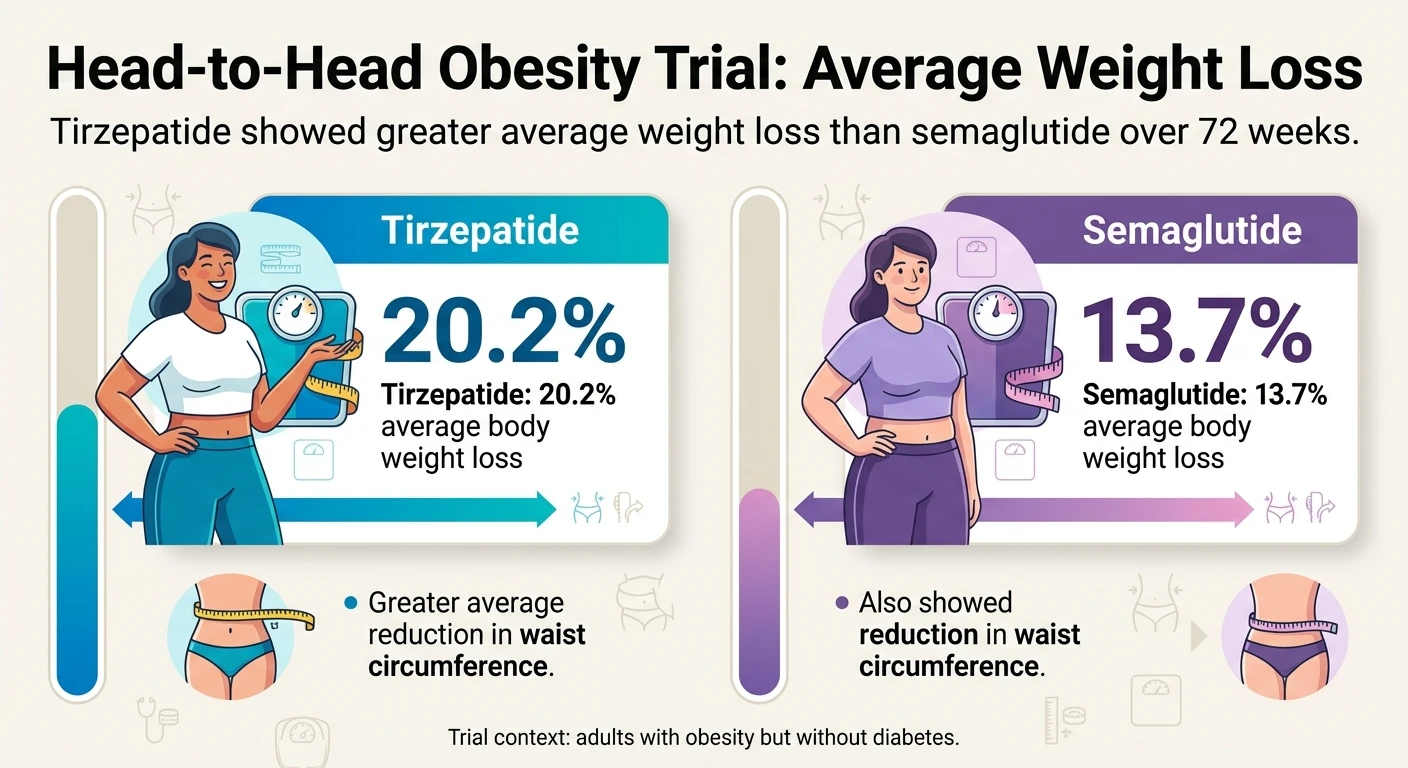
For most adults comparing these two for weight loss, Zepbound is the stronger medication. In the first head-to-head clinical trial (SURMOUNT-5, New England Journal of Medicine, 2025), tirzepatide produced 20.2% average body weight loss versus 13.7% for semaglutide over 72 weeks — 47% more relative weight loss.¹ Zepbound is also FDA-approved for weight loss. Ozempic is not.²
But if you have type 2 diabetes — especially with heart disease or kidney concerns — Ozempic may be the smarter medical choice. Its cardiovascular and kidney protections are FDA-labeled and proven in dedicated trials.² Zepbound can’t make those claims yet.
Free coverage checker · PA handling · Licensed clinicians · Separate membership fee applies
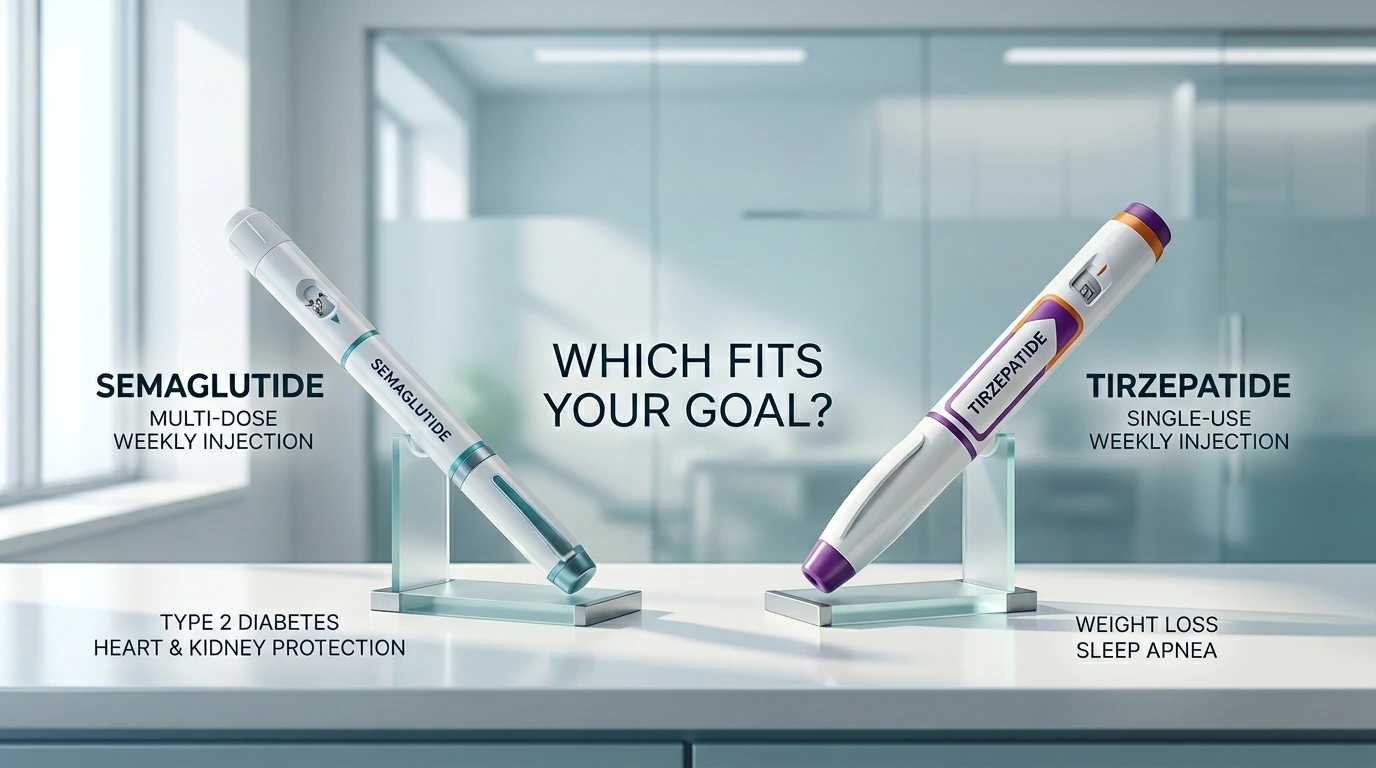
Ozempic vs Zepbound at a Glance: Full Side-by-Side Comparison
Every comparison page gives you a table. Ours includes the things that actually change your decision — not just medical specs, but the insurance logic and what you’ll really pay.
| Ozempic | Zepbound | |
|---|---|---|
| Generic name | Semaglutide | Tirzepatide |
| Manufacturer | Novo Nordisk | Eli Lilly |
| How it works | GLP-1 receptor agonist (1 hormone) | GLP-1 + GIP receptor agonist (2 hormones) |
| FDA-approved for weight loss? | ❌ No — off-label only | ✅ Yes |
| FDA-approved for type 2 diabetes? | ✅ Yes | ❌ No (Mounjaro is the diabetes version) |
| FDA-labeled cardiovascular benefit? | ✅ Yes — reduces major CV events in T2D + heart disease | ⏳ Not yet (SURMOUNT-MMO trial ongoing) |
| FDA-labeled kidney benefit? | ✅ Yes — reduces CKD progression in T2D + CKD | ❌ No |
| FDA-approved for sleep apnea? | ❌ No | ✅ Yes (2024) |
| Head-to-head weight loss (SURMOUNT-5) | 13.7% of body weight | 20.2% of body weight — 47% more |
| Max weekly dose | 2 mg | 15 mg |
| Lowest cash-pay | $199/mo intro (NovoCare, first 2 fills, through 6/30/26) | $299/mo (LillyDirect, 2.5 mg, within 45-day refill) |
| Insurance pattern | Easier for diabetes diagnosis | Better for obesity/weight-loss diagnosis |
| Best for | Type 2 diabetes + cardiovascular/kidney risk | Maximum weight loss in adults with obesity |
Sources: ¹SURMOUNT-5, NEJM 2025; ²Ozempic prescribing information 2025; ³Zepbound prescribing information 2026; pricing verified April 2026 from ozempic.com and zepbound.lilly.com.
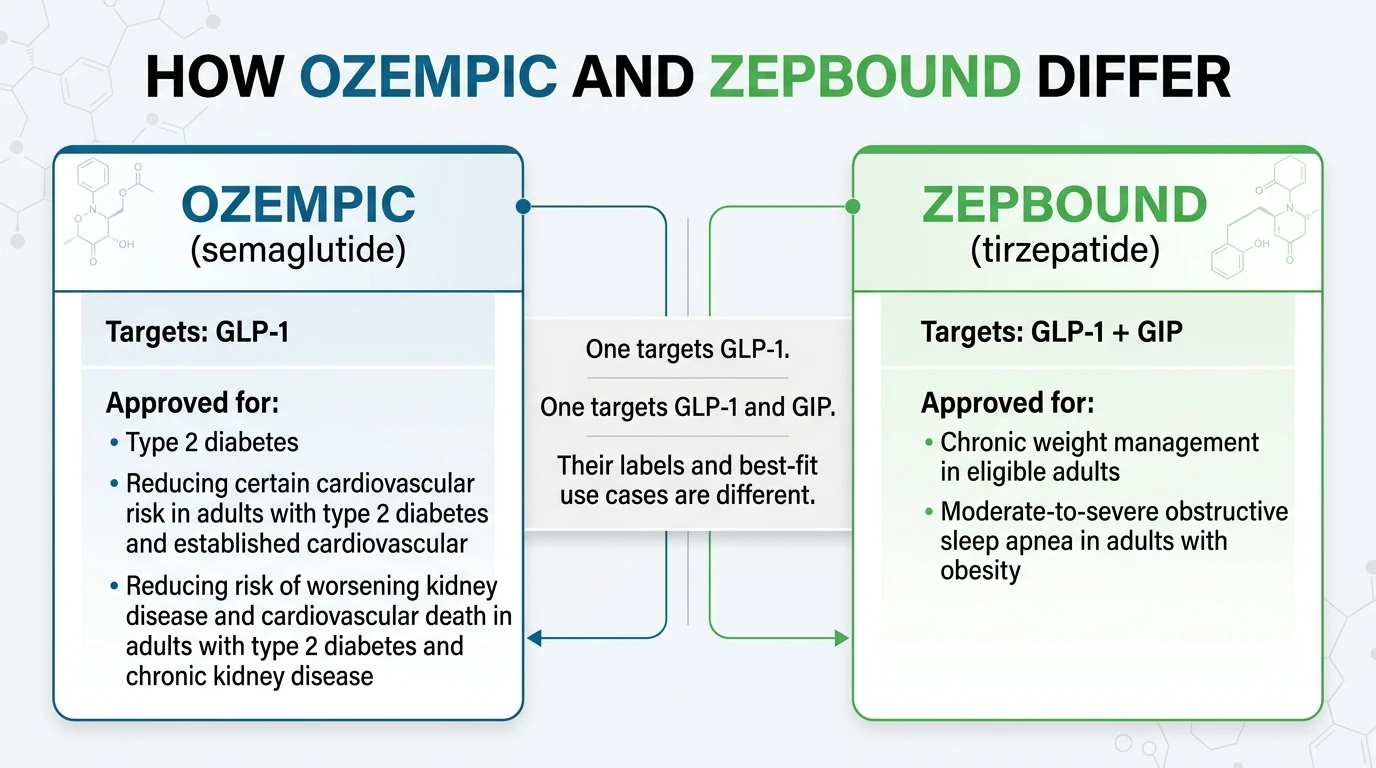
Who Should Choose Which? It Comes Down to 4 Situations
Most pages tell you “talk to your doctor.” That’s true — but unhelpful when you’re trying to walk into that conversation with a clear preference. Here’s how to think about it.
Situation 1
Your main goal is losing the most weight possible
Zepbound targets two appetite-regulating hormones (GLP-1 and GIP) instead of one. In SURMOUNT-5, that dual mechanism translated into 47% more weight loss than semaglutide.¹ It’s also the only one of these two drugs that’s FDA-approved for chronic weight management.³
If you don’t have diabetes and your primary motivation is weight loss, Zepbound is the clinically supported choice.
Insurance concierge included · PA handling · Separate membership fee applies
Situation 2
You have type 2 diabetes
Ozempic’s FDA label covers three things Zepbound’s does not: glycemic control in type 2 diabetes, reduction of major adverse cardiovascular events (heart attack, stroke, CV death) in adults with T2D and established heart disease, and reduction of kidney disease progression in adults with T2D and chronic kidney disease.²
Those aren’t small differences. They’re labeled, proven benefits backed by dedicated clinical trials. Your insurance is also significantly more likely to cover Ozempic when it’s prescribed for diabetes.
Free coverage check · Ro membership fee applies separately
Situation 3
You need the most affordable path
Ozempic via NovoCare
$199/mo first 2 fills (0.25–0.5 mg, through 6/30/2026) · then $349/mo (0.25–1 mg) · $499/mo (2 mg)
Zepbound via LillyDirect
$299/mo (2.5 mg) · $399/mo (5 mg) · $449/mo (7.5–15 mg) — must refill within 45 days
TrumpRx program
Ozempic $199/mo · Zepbound $299/mo · Requires valid Rx · No Medicare/Medicaid
If even these are too steep, telehealth providers like MEDVi offer FDA-approved GLP-1 programs with competitive pricing structures — worth exploring if insurance isn’t an option.
FDA-approved medications · Streamlined telehealth process
Situation 4
You’re already on Ozempic and wondering about switching
The SURMOUNT-5 data suggests you’d likely lose more weight on tirzepatide.¹ But the insurance math matters. If your plan covers Ozempic for diabetes at a $25 copay and won’t cover Zepbound for weight loss, switching could mean going from $25/month to $299+ out of pocket.
Free insurance checker · Know the numbers before you decide
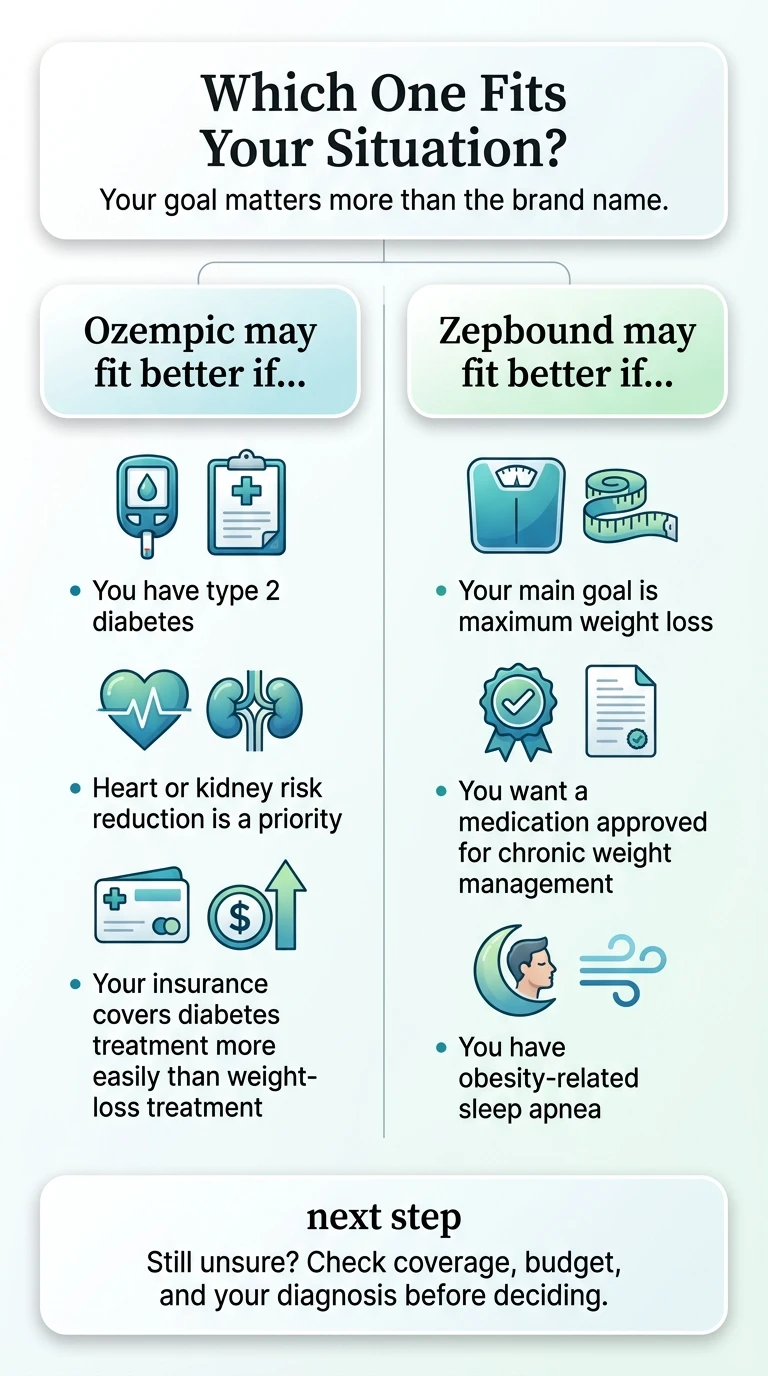
How Much Weight Will You Lose? The Head-to-Head Evidence
SURMOUNT-5: The Only Direct Head-to-Head Comparison
SURMOUNT-5 enrolled 751 adults with obesity (BMI ≥30, or ≥27 with comorbidities) who did not have type 2 diabetes. Participants received either the maximum tolerated dose of tirzepatide (10 or 15 mg) or semaglutide (1.7 or 2.4 mg) — weekly injections for 72 weeks. Results were published in the New England Journal of Medicine in July 2025.¹
| Outcome | Tirzepatide | Semaglutide |
|---|---|---|
| Average weight loss | 20.2% of body weight | 13.7% of body weight |
| Average pounds lost | 50.3 lbs | 33.1 lbs |
| Lost ≥15% body weight | 64.6% of participants | 40.1% of participants |
| Lost ≥25% body weight | 31.6% of participants | 16.1% of participants |
| Waist circumference reduction | 7.2 inches | 5.1 inches |
| Stopped due to GI side effects | 2.7% | 5.6% |
Source: Aronne et al., SURMOUNT-5, NEJM 2025.¹
The Nuance That Matters: These Doses Are Wegovy-Range, Not Ozempic-Range
SURMOUNT-5 used semaglutide at doses up to 2.4 mg — which matches Wegovy dosing for weight loss. Ozempic’s maximum approved dose is 2 mg, and it’s approved for diabetes management, not weight loss.²
In Ozempic’s own diabetes-focused trials (the SUSTAIN program), weight loss was a secondary outcome. Adults lost an average of approximately 7 to 14 lbs depending on the dose and comparator.⁴
What Could Your Results Look Like?
These projections use SURMOUNT-5 trial averages for tirzepatide (20.2%) and a conservative estimate for Ozempic-range semaglutide dosing (~10%). Your individual results will vary.
| Starting weight | Ozempic (~10%) | Zepbound (~20%) | Difference |
|---|---|---|---|
| 200 lbs | ~20 lbs → 180 lbs | ~40 lbs → 160 lbs | +20 lbs |
| 225 lbs | ~23 lbs → 202 lbs | ~45 lbs → 180 lbs | +22 lbs |
| 250 lbs | ~25 lbs → 225 lbs | ~50 lbs → 200 lbs | +25 lbs |
| 275 lbs | ~28 lbs → 247 lbs | ~55 lbs → 220 lbs | +27 lbs |
| 300 lbs | ~30 lbs → 270 lbs | ~60 lbs → 240 lbs | +30 lbs |
Tirzepatide figure: SURMOUNT-5 average (20.2%). Semaglutide figure: conservative ~10% estimate for Ozempic-range dosing. Combined with diet and exercise. Not a guarantee — a realistic range. If prescribed Wegovy for weight loss, semaglutide results are closer to ~14–15%.
Seen the data. Ready to find out what you qualify for?
Ro pairs you with a licensed clinician, checks your insurance, and handles prior authorizations for both Ozempic and Zepbound.
FDA-approved medication · Free insurance check · PA handling included
When Ozempic Is Actually the Smarter Choice
Blood sugar control in type 2 diabetes
Ozempic is specifically approved and dosed for T2D management, with extensive clinical data behind it. Zepbound is not approved for type 2 diabetes (Mounjaro, tirzepatide's diabetes version, is).
Cardiovascular risk reduction
Ozempic's label includes reduction of major adverse cardiovascular events (CV death, nonfatal heart attack, nonfatal stroke) in adults with T2D and established cardiovascular disease — based on the SUSTAIN 6 cardiovascular outcomes trial. Zepbound's CV outcomes trial (SURMOUNT-MMO) is ongoing.
Kidney disease protection
Based on the FLOW trial (NEJM, 2024), Ozempic reduces the risk of kidney disease progression, end-stage kidney disease, and cardiovascular death in adults with T2D and chronic kidney disease. Zepbound does not have this label.
Ozempic vs Zepbound Cost in 2026: What You’ll Actually Pay
List Prices (What Almost Nobody Pays)
Ozempic list price
~$1,028/month
Almost nobody pays this
Zepbound list price
~$1,086/month
Almost nobody pays this
With Commercial Insurance
Ozempic + commercial insurance (T2D)
As low as $25/month with the Novo Nordisk savings card. Most commercial plans cover Ozempic for documented T2D — this is the most reliable path to affordable GLP-1 coverage.
Zepbound + commercial insurance (obesity)
As low as $25/month with the Eli Lilly savings card — if your plan covers it. Coverage is improving but not universal. Typically requires BMI ≥30 or ≥27 with comorbidities.
Without Insurance: Cash-Pay Programs
| Program | Ozempic | Zepbound |
|---|---|---|
| Manufacturer direct | NovoCare: $199/mo first 2 fills (0.25 or 0.5 mg, through 6/30/26) → $349/mo (0.25–1 mg) → $499/mo (2 mg) | LillyDirect: $299/mo (2.5 mg) → $399/mo (5 mg) → $449/mo (7.5–15 mg) if refilled within 45 days. Higher outside that window. |
| TrumpRx | $199/month | $299/month |
| Ro | Available — insurance concierge included. Separate membership fee applies. | Available — insurance concierge included. Separate membership fee applies. |
| MEDVi | FDA-approved GLP-1 options available | FDA-approved GLP-1 options available |
All pricing verified April 2026 from manufacturer savings pages. Prices may vary by dose and program terms.
Medicare: A Historic Change Is Coming
Medicare GLP-1 Bridge (July 1 – December 31, 2026)
Zepbound covered · Wegovy coveredCMS will cover Wegovy and Zepbound for weight reduction at a $50/month copay for eligible Medicare Part D beneficiaries. Requires BMI 35+, or BMI 27+ with specific clinical criteria. Prior authorization through a CMS central processor required. Does not cover Ozempic or Mounjaro for weight loss.
BALANCE Model (January 2027)
Plan-dependentA voluntary longer-term model that participating Part D plans can opt into. May include a broader set of GLP-1 medications including Ozempic and Mounjaro, but coverage depends on whether your specific plan joins. Not guaranteed universal coverage.
Free insurance checker · Both Ozempic and Zepbound · Membership fee applies
Does Insurance Cover Ozempic or Zepbound for Weight Loss?
Ozempic for diabetes
ReliableMost commercial plans cover it, often with prior authorization. The most reliable path to insurance-covered GLP-1 treatment.
Ozempic for weight loss
Rarely coveredRarely covered. Not FDA-approved for weight loss. Insurers typically deny off-label weight-loss prescriptions.
Zepbound for weight loss
InconsistentImproving but inconsistent. Some plans cover for obesity (BMI ≥30 or ≥27 with comorbidities). Many still don't.
Zepbound for sleep apnea
Better oddsBetter odds since FDA approved Zepbound for moderate-to-severe OSA in 2024.
How to Maximize Your Coverage Chances
Get a formal diagnosis documented — BMI ≥30, or ≥27 with comorbidities like hypertension, sleep apnea, or high cholesterol
Document every comorbidity — each one strengthens your prior authorization request
Have your doctor submit a prior authorization with full medical records, lab work, and documentation of medical necessity
If denied, appeal — many initial denials are overturned with supporting documentation
Consider a provider with insurance support — Ro handles prior authorizations and appeals on your behalf
Related: Does Insurance Cover Zepbound for Weight Loss? (April 2026) → · How to Appeal a Zepbound Denial — 7 Steps →
Ozempic vs Zepbound Side Effects: Which Is Harder to Tolerate?
Common side effects (both)
- ·Nausea — peaks in first 2–4 weeks and during dose increases
- ·Diarrhea
- ·Constipation
- ·Stomach pain / abdominal discomfort
- ·Vomiting — more common during escalation
- ·Fatigue
- ·Injection site reactions
Zepbound-specific notes
- ·Hair loss listed on Zepbound's label (generally from rapid weight loss)
- ·Injection site reactions more commonly noted on Zepbound's label
- ·Despite stronger weight loss, fewer GI discontinuations in SURMOUNT-5 (2.7% vs 5.6%)
How to Minimize Side Effects
Start at the lowest dose and titrate slowly — both medications have a gradual schedule for exactly this reason
Eat smaller, more frequent meals — the single most effective dietary adjustment
Avoid greasy or heavy foods during the first weeks
Stay hydrated — dehydration worsens GI symptoms
Take your injection at the same time each week
If a side effect persists, tell your provider — dose adjustments often resolve it
Licensed clinician oversight · Dose adjustment support
Can You Switch from Ozempic to Zepbound?
Common reasons people switch
Weight-loss plateau on Ozempic
After initial results, weight stabilizes despite dose increases. SURMOUNT-5 data suggests tirzepatide can restart progress.¹
Insurance or coverage changes
Plan drops Ozempic, or you're transitioning from a diabetes treatment plan to a weight-management program.
Wanting the stronger weight-loss option
Many started with Ozempic because it was prescribed first, then learned about Zepbound's clinical advantage.
How it works
Your doctor will typically restart you at a low Zepbound dose (2.5 mg) and gradually increase, even if you were on Ozempic’s max dose. This minimizes side effects as your body adjusts.
Free insurance check · Know your out-of-pocket before you switch
Wait — Are You Actually Comparing the Wrong Two Drugs?
This might be the most valuable section on this page.
If your goal is weight loss and you don’t have diabetes, your real head-to-head comparison may be Wegovy vs Zepbound, not Ozempic vs Zepbound. Ozempic is FDA-approved for type 2 diabetes. Wegovy is FDA-approved for weight loss — same active ingredient as Ozempic (semaglutide), but at higher doses and with a different label.
| Your situation | Semaglutide option | Tirzepatide option |
|---|---|---|
| Type 2 diabetes | Ozempic ✅ | Mounjaro ✅ |
| Weight loss (no diabetes) | Wegovy ✅ | Zepbound ✅ |
| Weight loss + sleep apnea | Wegovy | Zepbound (also FDA-approved for OSA) |
See also: Ozempic vs Wegovy: 11 Real Differences in 2026 → · Cheapest Zepbound Without Insurance (2026) →
Ozempic vs Zepbound Dosing: What to Expect
Ozempic dose schedule
| Period | Dose |
|---|---|
| Weeks 1–4 | 0.25 mg/week (adjustment dose) |
| Weeks 5+ | 0.5 mg/week (first therapeutic) |
| If needed | 1 mg/week |
| Maximum | 2 mg/week |
Zepbound dose schedule
| Period | Dose |
|---|---|
| Weeks 1–4 | 2.5 mg/week (starting dose) |
| Weeks 5–8 | 5 mg/week |
| Weeks 9+ | +2.5 mg every 4+ weeks as tolerated |
| Maximum | 15 mg/week |
Are Shortages Still an Issue?
The FDA has stated that both tirzepatide injection and semaglutide injection shortages are resolved as of 2025.¹² That said, localized or intermittent supply issues can still happen — certain doses may be temporarily unavailable at specific pharmacies. Manufacturer-direct programs (LillyDirect, NovoCare) and established telehealth providers (Ro, MEDVi) tend to have the most reliable supply chains.
How We Verified This Comparison
SURMOUNT-5 (Aronne et al., NEJM, 2025)
Primary evidence — the only direct head-to-head trial published as of April 2026
FDA prescribing information
Ozempic (2025 revision) and Zepbound (2026 revision) — checked for all approved indications
Official manufacturer pricing pages
Ozempic.com/savings and Zepbound.lilly.com/savings — verified April 3, 2026
FLOW trial (NEJM, 2024)
Source for Ozempic kidney indication data
CMS Medicare GLP-1 Bridge FAQs
Updated March 2026 — Medicare coverage change details
JAMA Internal Medicine real-world comparison (2024)
Real-world confirmation of SURMOUNT-5 advantage in clinical practice
Frequently Asked Questions: Ozempic vs Zepbound
Is Zepbound better than Ozempic for weight loss?
For most people comparing them for weight loss, yes. The SURMOUNT-5 trial showed tirzepatide produced 20.2% average body weight loss versus 13.7% for semaglutide at comparable high doses over 72 weeks. A JAMA real-world study confirmed the advantage in everyday clinical practice. However, Ozempic may be the better overall choice if you have type 2 diabetes with cardiovascular or kidney concerns.
Is Ozempic FDA-approved for weight loss?
No. Ozempic is FDA-approved for type 2 diabetes, cardiovascular risk reduction in adults with T2D and established heart disease, and kidney disease risk reduction in adults with T2D and chronic kidney disease. Weight loss with Ozempic is off-label. The FDA-approved weight-loss version of semaglutide is Wegovy.
Who should choose Ozempic instead of Zepbound?
People with type 2 diabetes — especially if heart or kidney protection is part of the picture. Ozempic has dedicated FDA-labeled indications for reducing cardiovascular events and kidney disease progression that Zepbound cannot yet claim. Insurance coverage is also significantly easier for Ozempic when prescribed for diabetes.
Can you take Ozempic and Zepbound together?
No. Zepbound's prescribing information states that coadministration with any GLP-1 receptor agonist is not recommended. If switching, your doctor will transition you from one to the other — not overlap them.
How much does Zepbound cost vs Ozempic without insurance?
List prices are similar at roughly $1,028–$1,086/month. Through manufacturer cash-pay programs: Ozempic through NovoCare starts at $199/month for the first 2 fills of starter doses (through 6/30/2026), then $349–499/month. Zepbound through LillyDirect starts at $299/month for 2.5 mg vials when refilled within 45 days.
Does insurance cover Zepbound for weight loss?
Coverage varies by plan and is improving but not universal. Ozempic is generally easier to cover for diabetes. Starting July 2026, Medicare will cover Wegovy and Zepbound for weight loss at $50/month through the GLP-1 Bridge program for eligible beneficiaries. Check your specific plan — coverage rules change frequently.
Can you switch from Ozempic to Zepbound?
Yes, with your doctor's guidance. You'll typically restart at Zepbound's lowest dose (2.5 mg) and titrate up gradually. Check insurance implications first — your out-of-pocket cost may change substantially.
What are the side effects of Zepbound vs Ozempic?
Both commonly cause nausea, diarrhea, constipation, and stomach pain — especially during the first weeks and dose escalation. In SURMOUNT-5, fewer people stopped tirzepatide due to GI side effects (2.7%) than stopped semaglutide (5.6%). Despite being stronger for weight loss, tirzepatide does not appear to be harder to tolerate.
What if I've plateaued on Ozempic?
Plateaus are common and one of the most frequent reasons people explore switching. SURMOUNT-5 data suggests tirzepatide's dual-hormone mechanism may restart weight loss progress. Talk to your provider about whether transitioning makes sense for your situation.
Will Medicare cover Ozempic or Zepbound for weight loss?
Starting July 1, 2026, the Medicare GLP-1 Bridge program will cover Wegovy and Zepbound for weight reduction at $50/month for eligible Part D enrollees (BMI 35+, or 27+ with qualifying conditions). The Bridge does not cover Ozempic for weight loss. The voluntary BALANCE model may expand coverage through participating plans starting January 2027. Ozempic remains coverable through standard Part D for type 2 diabetes.
Still Not Sure Which GLP-1 Is Right for You?
You’ve seen the data. You know the pricing. You understand which situations favor which medication. If you’re still not 100% certain — that’s completely normal. This is a meaningful health decision. Here’s what we know: the people who get the best results are the ones who actually start.

Answer a few questions about your goals, insurance, and health profile. We’ll show you which path fits — no commitment required.
Or, if you already know what you want:
Ro prescribes FDA-approved GLP-1 medications, pairs you with a licensed clinician, and includes an insurance concierge that handles coverage and prior authorizations. Membership fee applies separately from medication cost.
FDA-approved medications · Streamlined telehealth process · Competitive pricing
Related guides
- Ozempic vs Wegovy: 9 Real Differences in 2026
- Rybelsus vs Wegovy Pill: Which Should You Take?
- Does Insurance Cover Zepbound for Weight Loss? (April 2026)
- How to Appeal a Zepbound Denial — 7 Steps That Work (2026)
- Cheapest Zepbound Without Insurance: Real 2026 Prices
- Does Insurance Cover Wegovy for Weight Loss? (April 2026)
- How to Appeal a Wegovy Denial — 7 Real Steps (2026)
- Best GLP-1 Providers That Accept Insurance (2026)
- Best Online Wegovy Provider: 7 Legit Options (2026)
- GLP-1 Providers That Take FSA: 8 Verified Picks (2026)
- Zepbound for Sleep Apnea: 7 Real Answers on Cost, Coverage & Access (2026)
Reference Notes
- 1.Aronne LJ, et al. Tirzepatide as Compared with Semaglutide for the Treatment of Obesity. NEJM. 2025;393(1). ClinicalTrials.gov: NCT05822830.
- 2.Ozempic (semaglutide) injection prescribing information. Novo Nordisk. Revised 2025.
- 3.Zepbound (tirzepatide) injection prescribing information. Eli Lilly. Revised 2026.
- 6.Ozempic savings and self-pay pricing. ozempic.com/savings. Verified April 2026.
- 7.Zepbound savings and self-pay pricing. zepbound.lilly.com/savings. Verified April 2026.
- 9.Rodriguez T, et al. Real-world comparison of tirzepatide and semaglutide for weight loss. JAMA Internal Medicine. 2024.
- 10.Perkovic V, et al. Effects of Semaglutide on Chronic Kidney Disease in Patients with Type 2 Diabetes (FLOW). NEJM. Published May 2024.
- 11.CMS Medicare GLP-1 Bridge FAQs. cms.gov. Updated March 2026.
- 12.FDA drug shortage database. tirzepatide and semaglutide injection shortages resolved.
Affiliate disclosure: Some links on this page go to partner providers including Ro and MEDVi. We earn a commission if you use these services at no extra cost to you. This doesn’t change our analysis or editorial independence. Our recommendations are based on clinical evidence, FDA labeling, and verified pricing — not commission rates. Full disclosure →
This page is for informational and educational purposes only. It does not constitute medical advice. Always consult a licensed healthcare professional before starting, stopping, or changing any medication.
Last verified: April 3, 2026 · By The RX Index Editorial Team
Free insurance check · FDA-approved medications · PA handling