
Best Tirzepatide for Insulin Resistance (2026): Mounjaro vs Zepbound, Real Cost, and the Safest Path
Last verified: May 12, 2026 — The RX Index Editorial Team
This page is educational and is not medical advice. Prescription eligibility, safety, and coverage depend on clinician review, diagnosis, medication history, and plan rules. We may earn commissions on some links; that never changes the ranking. Full editorial and affiliate policy linked in the footer.
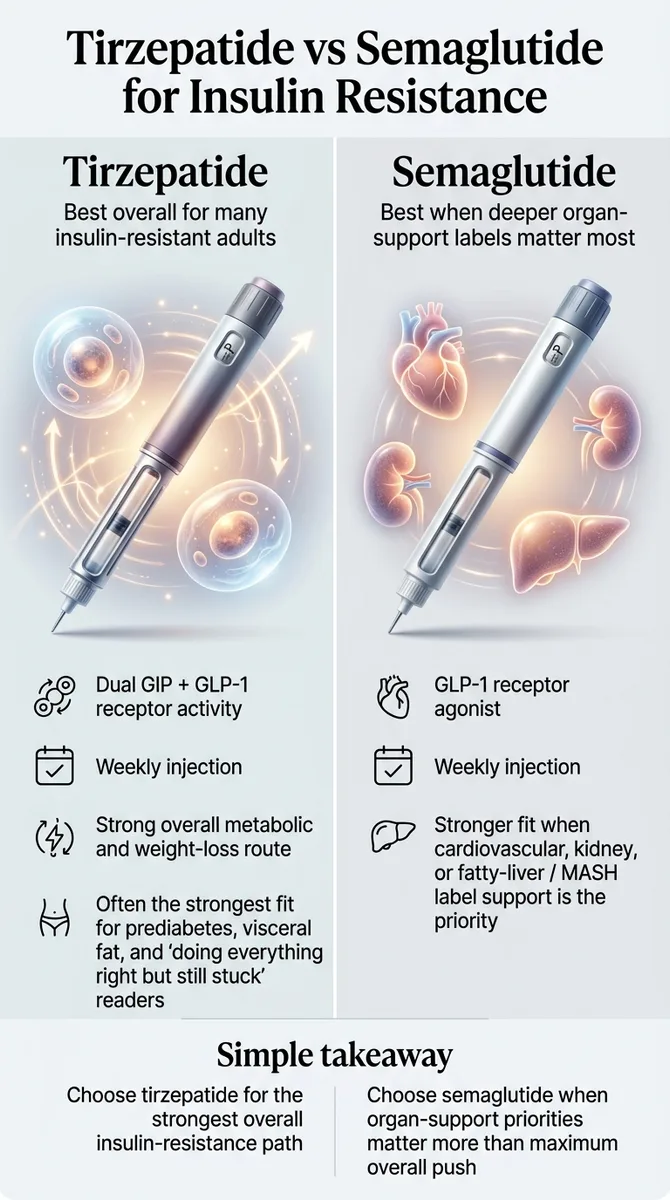
What is the best tirzepatide for insulin resistance?
The best tirzepatide for insulin resistance is the FDA-approved version your diagnosis qualifies you for — not the brand with the lowest sticker price.
Tirzepatide comes in two FDA-approved versions, both made by Eli Lilly. Mounjaro is FDA-approved as an adjunct to diet and exercise to improve glycemic control in adults with type 2 diabetes. Zepbound is FDA-approved for chronic weight management in adults with obesity, or with overweight plus a weight-related condition, and for moderate-to-severe obstructive sleep apnea in adults with obesity. Same molecule. Different labels. Different insurance paths.
If you have type 2 diabetes, ask your clinician about Mounjaro. If you have insulin resistance with a BMI of 27 or higher plus a documented weight-related condition (prediabetes, high blood pressure, sleep apnea, high cholesterol), Zepbound is usually the right conversation. For online access in 2026, Ro is the strongest first step because most readers fail at the same wall — getting insurance to approve the prescription — and Ro's insurance concierge handles that paperwork for you. Sesame Care is the best second option if you want Mounjaro (Ro currently carries Zepbound but not Mounjaro), provider choice, or transparent cash-pay pricing.
Insulin resistance by itself is not an FDA-approved indication for tirzepatide. But many adults with diagnosed insulin resistance have a legitimate path — through type 2 diabetes, BMI-based Zepbound eligibility, prediabetes as a weight-related condition, or another documented comorbidity.
Free insurance check on Ro — no commitment. Same-day prescriptions on Sesame when clinically appropriate.
Your tirzepatide path at a glance
| Your situation | The right tirzepatide | Best first step | What it actually costs |
|---|---|---|---|
| You have type 2 diabetes | Mounjaro | Talk to your clinician; if you also need provider choice or same-day Rx, Sesame Care | As low as $25/month with commercial insurance and the Mounjaro Savings Card |
| You have insulin resistance + BMI ≥27 + a weight-related condition | Zepbound | Ro for insurance coverage and prior auth; Sesame Care for provider choice | $25/month insured (Zepbound Savings Card, up to $1,300 annual savings), or $299–$449/month cash through LillyDirect-matched programs |
| You have prediabetes or PCOS but no firm diagnosis yet | Get labs first | Talk to a clinician; run our path quiz | Lab cost varies; medication conversation comes after diagnosis |
| You have commercial insurance but don't know if Zepbound is covered | Coverage-check route | Ro's free GLP-1 Insurance Coverage Checker | Free check; medication cost depends on plan |
| You're on Medicare Part D | Medicare GLP-1 Bridge (starting July 1, 2026) | Talk to your clinician about Bridge eligibility | $50/month for eligible Part D beneficiaries on qualifying medications |
| You're shopping compounded tirzepatide because of price | Read the safety section first | Don't make this the default for an insulin-resistance question | The legal pathway narrowed sharply in 2025–2026 (covered below) |
→ Run the free Tirzepatide Path Check — 60 seconds, no email needed.
Is tirzepatide FDA-approved for insulin resistance?
Answer:
No. Mounjaro is FDA-approved for glycemic control in type 2 diabetes. Zepbound is FDA-approved for chronic weight management in adults with obesity or with overweight plus a weight-related condition, and for moderate-to-severe obstructive sleep apnea in adults with obesity. “Insulin resistance” by itself is not a standalone FDA indication for any GLP-1 drug. That doesn't mean you can't get prescribed it — most adults with diagnosed insulin resistance qualify through one of the approved pathways.
Here's the cleanest read of the labels:
- Mounjaro(Eli Lilly, FDA label): adjunct to diet and exercise to improve glycemic control in adults with type 2 diabetes mellitus. The label also notes pediatric use for patients 10 years and older.
- Zepbound(Eli Lilly, FDA label): with reduced-calorie diet and increased physical activity, to reduce excess body weight and maintain weight reduction long term in adults with obesity, or adults with overweight in the presence of at least one weight-related comorbid condition. Also approved for moderate-to-severe obstructive sleep apnea in adults with obesity.
If you have insulin resistance and one of the conditions above is also documented, your clinician has a legitimate pathway to prescribe. If you don't, you're in genuinely off-label territory and most legitimate providers will decline.
Does tirzepatide improve insulin resistance? What the trials actually show
Answer:
Yes. Tirzepatide significantly improved insulin-resistance markers in published clinical trials, and some of the effect was not explained by weight loss alone. In SURPASS-2 (a 40-week head-to-head against semaglutide in adults with type 2 diabetes), tirzepatide reduced HOMA2-IR by 15.5% to 24.0% across doses versus 5.1% for semaglutide 1 mg. In the SURMOUNT-1 follow-up published in Diabetes Care in July 2025, non-diabetic adults with prediabetes saw clinically meaningful improvements in insulin sensitivity and β-cell function over 72 weeks.
What HOMA2-IR is and why it matters
HOMA2-IR (Homeostatic Model Assessment for Insulin Resistance, version 2) is a score calculated from your fasting glucose and fasting insulin. Lower number = your body is responding better to insulin. It's the standard research measure for insulin resistance, which is why every major tirzepatide trial reports it.
SURPASS-2: head-to-head against semaglutide
SURPASS-2 (Frias et al., Journal of Clinical Endocrinology & Metabolism, 2024) compared tirzepatide against semaglutide 1 mg over 40 weeks in adults with type 2 diabetes on metformin.
| Dose | HOMA2-IR reduction | Comparator (semaglutide 1 mg) |
|---|---|---|
| Tirzepatide 5 mg | −15.5% | −5.1% |
| Tirzepatide 10 mg | Within the 15.5–24.0% reported range | −5.1% |
| Tirzepatide 15 mg | −24.0% | −5.1% |
That's roughly 3 to 5 times the insulin resistance reduction of the most common GLP-1 comparator. Tirzepatide also produced larger HbA1c drops and more weight loss in the same trial.
SURMOUNT-1 post hoc: non-diabetic adults with prediabetes or normal glucose
The SURMOUNT-1 post-hoc analysis (Mari et al., Diabetes Care, July 22, 2025, DOI 10.2337/dc25-076) looked at 2,539 adults with obesity or overweight — without diabetes at baseline — over 72 weeks. After treatment with tirzepatide at 5, 10, or 15 mg:
- Insulin-sensitivity measures (HOMA2-IR, Matsuda index, OGIS) improved significantly versus placebo.
- β-cell function indices improved versus placebo.
- The insulin-sensitivity improvement was strongly related to weight loss and partly related to tirzepatide treatment independently of weight loss.
- Improvements appeared within the first 12 weeks and largely plateaued around week 36.
Why the effect isn't only weight loss
The mechanistic interpretation researchers point to: the GIP (glucose-dependent insulinotropic polypeptide) receptor that tirzepatide hits, which semaglutide does not, appears to act directly on fat cells to reduce lipotoxicity — one of the things that breaks insulin signaling in the first place.
Honest caveat: Trial averages aren't personal guarantees. Real-world results tend to come in below clinical-trial averages, and current evidence suggests insulin resistance can return after stopping the drug. Every trial paired the medication with diet and activity guidance, and that combination is what produced the numbers above.
Ro checks your eligibility and insurance coverage for free.
Mounjaro or Zepbound for insulin resistance — which one do you actually need?
Answer:
Mounjaro and Zepbound contain the same molecule (tirzepatide) at the same doses, made by the same company. The difference is the FDA indication on the label, and that determines what your insurance will cover. Picking the wrong brand for your diagnosis means a denied claim.
Pick Mounjaro if you have type 2 diabetes
If your HbA1c is 6.5% or higher (or your fasting glucose is over 125 mg/dL on confirmed testing), you have type 2 diabetes — and Mounjaro is the FDA-approved tirzepatide for you. Insurance is much more likely to cover it, savings cards apply, and some Medicare Part D and Medicare Advantage plans cover it. With commercial insurance and the Mounjaro Savings Card, eligible patients can pay as little as $25/month (governmental beneficiaries excluded; terms apply). Lilly's pricing page lists Mounjaro at $1,112.16 per fill at retail list price.
Pick Zepbound if you don't have type 2 diabetes but qualify on BMI plus a condition
This is where most people with insulin resistance end up. The FDA approved Zepbound for chronic weight management in adults with:
- •Obesity (typically BMI ≥30), or
- •Overweight (typically BMI ≥27) in the presence of at least one weight-related comorbid condition — hypertension, dyslipidemia, type 2 diabetes, obstructive sleep apnea, cardiovascular disease, and (in clinical practice) prediabetes.
Insulin resistance itself isn't named on the label. But almost every adult with diagnosed insulin resistance also has one of the conditions above. That's the legitimate path. With commercial insurance and the Zepbound Savings Card, eligible patients pay as little as $25/month, subject to a maximum annual savings of up to $1,300 per calendar year (governmental beneficiaries excluded; terms apply). Without insurance, LillyDirect sells single-dose Zepbound vials at $299/month for 2.5 mg, $399 for 5 mg, and $449 for 7.5 mg through 15 mg under the Self Pay Journey Program (refill within 45 days required to keep discounted higher-dose pricing).
What about prediabetes specifically?
In August 2024, Eli Lilly reported that in a three-year extension of the SURMOUNT-1 trial, tirzepatide cut the risk of progressing to type 2 diabetes by 94% in adults with prediabetes and obesity or overweight, compared to placebo plus lifestyle changes. That doesn't make “insulin resistance” a standalone FDA indication. It does mean clinicians have very strong evidence to prescribe Zepbound for adults with prediabetes who meet the BMI threshold.
The brand split
| Question | Mounjaro | Zepbound |
|---|---|---|
| FDA-approved for | Type 2 diabetes (glycemic control); includes pediatric ≥10 years | Chronic weight management in qualifying adults; moderate-to-severe OSA with obesity |
| Best fit when… | You have type 2 diabetes | You have insulin resistance, prediabetes, or metabolic risk + qualifying BMI/comorbidity |
| Active ingredient | Tirzepatide | Tirzepatide |
| Same molecule? | Yes, identical | Yes, identical |
| What insurance typically asks for | Confirmed T2D diagnosis (HbA1c documentation); prior auth varies | Documentation of BMI + weight-related comorbidity; prior authorization common |
| Savings card | As low as $25/month (Mounjaro Savings Card; commercial insurance only) | As low as $25/month (Zepbound Savings Card; up to $1,300 annual savings cap; commercial insurance only) |
| Cash-pay options | Lilly self-pay programs; pharmacy retail | LillyDirect Self Pay Journey Program; Ro KwikPen; Sesame Care |
| Retail list price | $1,112.16 per fill | $1,086.37 per fill (single-dose pen) |
| Available through | Sesame Care, traditional pharmacies, endocrinology clinics | Ro, Sesame Care, LillyDirect, traditional pharmacies |
Can I get tirzepatide if I have insulin resistance but I'm not diabetic?
Answer:
Maybe — but the prescription will almost always run through the Zepbound (chronic weight management) indication, not Mounjaro, and you'll need a BMI of 27 or higher plus a documented weight-related condition. Insulin resistance by itself is not on any FDA label. The good news: prediabetes counts as a weight-related condition in clinical practice, and most adults with diagnosed insulin resistance have at least one qualifying comorbidity.
What clinicians actually look at
When a clinician decides whether to prescribe Zepbound, the question isn't “do you have insulin resistance?” The question is whether you fit the FDA-approved indication: BMI ≥30 (obesity), OR BMI ≥27 with at least one weight-related comorbidity.
The comorbidities most commonly accepted: hypertension, dyslipidemia, type 2 diabetes, obstructive sleep apnea, cardiovascular disease, prediabetes, and increasingly PCOS with metabolic features under clinician judgment.
The eligibility map for “insulin resistance”
| Your presentation | Path to a Zepbound prescription | Plan-approval friction |
|---|---|---|
| Insulin resistance + BMI ≥30 | Direct via obesity indication | Best documentation fit — BMI ≥30 alone qualifies on most plans that cover Zepbound |
| Insulin resistance + BMI 27–29.9 + prediabetes (HbA1c 5.7–6.4%) | Via BMI + prediabetes as comorbidity | Strong documentation fit; plan approval still varies |
| Insulin resistance + BMI 27–29.9 + hypertension or dyslipidemia | Via BMI + cardiovascular comorbidity | Strong documentation fit; plan approval varies |
| PCOS + insulin resistance + BMI ≥27 | Via BMI + metabolic comorbidity | Moderate; PCOS itself isn't on the Zepbound label, but BMI + comorbidity is |
| Metabolic syndrome + obesity (BMI ≥30) | Via obesity indication | Best fit for non-diabetic insulin-resistant adults |
| Insulin resistance + BMI <27 + no other diagnosis | Off-label; most legitimate providers will decline | Low — this is the genuinely hard case |
If your BMI is under 27 and you have no other documented condition, you're in true off-label territory and you'll likely be turned down by responsible FDA-approved providers.
What to do if you're in the hard case
- 1.Get a full metabolic workup. Many insulin-resistant adults with a "normal" BMI have undocumented prediabetes, dyslipidemia, or metabolic syndrome that — once documented — opens the BMI-27 path.
- 2.Discuss metformin with your clinician. It's first-line, cheap, well-studied, and improves insulin sensitivity for many people.
- 3.Don't use this as a reason to chase unregulated compounded sources. The price gap that used to justify the regulatory risk has narrowed since March 2025.
What labs help decide whether tirzepatide is the right path?
Answer:
The practical labs are HbA1c, fasting glucose, kidney function (eGFR/creatinine), a lipid panel, and sometimes fasting insulin if your clinician uses HOMA-IR. Labs separate the diagnosis buckets — type 2 diabetes, prediabetes, metabolic syndrome, or “not enough documented yet” — and that determines which FDA-approved pathway you fit.
| Lab | What it tells you | Why it matters for tirzepatide eligibility |
|---|---|---|
| HbA1c | 3-month average blood sugar | 6.5% or higher = type 2 diabetes (Mounjaro path); 5.7–6.4% = prediabetes (Zepbound comorbidity path) |
| Fasting glucose | Glucose after overnight fast | 126 mg/dL or higher on confirmed testing = type 2 diabetes; 100–125 = prediabetes |
| Fasting insulin / HOMA-IR | Insulin sensitivity | Elevated values support a clinical diagnosis of insulin resistance for documentation purposes |
| Lipid panel | Cholesterol and triglycerides | Dyslipidemia counts as a weight-related comorbidity for Zepbound eligibility |
| Kidney function (eGFR, creatinine) | How well kidneys filter | Tirzepatide GI side effects can cause dehydration; clinicians monitor before and during |
| Liver enzymes (ALT, AST) | Liver inflammation | Often abnormal in metabolic-driven liver disease (MASLD/NAFLD), which can support comorbidity documentation |
| Blood pressure | Cardiovascular comorbidity | Hypertension counts as a weight-related comorbidity for Zepbound |
Most legitimate telehealth providers either require recent labs or order them as part of intake. LabCorp and Quest both honor electronic orders from telehealth clinicians.
Where to get FDA-approved tirzepatide online for insulin resistance in 2026
Answer:
Three legitimate online paths fit the insulin resistance reader. Ro is the strongest first stop because of its insurance concierge, which fights prior authorizations — the single biggest bottleneck for getting Zepbound approved through the BMI+comorbidity pathway. Sesame Care is the best second option for people who need Mounjaro (Ro doesn't carry it) or who want provider choice. Embody is the right path if you want a low-cost, cash-pay compounded option with no membership fees and the choice of weekly injections or a needle-free GLP-1 gum.
Ro — best first step when insurance is in the picture
Ro is the primary recommendation for this query for one specific reason: most readers with insulin resistance fail at the same wall, and Ro is built to climb it. The wall: insurance plans that technically cover Zepbound usually require prior authorization — paperwork documenting your BMI, your comorbidity, and a clinical reason the drug is necessary. Most online providers don't help. Ro's insurance concierge does the paperwork for you.
Ro pricing — verified May 12, 2026
- •Ro Body membership: $39 first month, then $149/month month-to-month, or as low as $74/month when you prepay annually.
- •Zepbound (pen) via insurance: as low as $25/month with commercial insurance and the Zepbound Savings Card (up to $1,300 annual savings cap; governmental beneficiaries excluded).
- •Zepbound KwikPen (cash): $299/month for 2.5 mg, $399/month for 5 mg, and $449/month for 7.5, 10, 12.5, and 15 mg — with 45-day refill compliance. Miss the 45-day window and the price increases to $499 for 7.5 mg and $699 for 10, 12.5, and 15 mg refills.
- •Insurance concierge included for commercial plans. Ro does not currently coordinate coverage for Medicare, Medicaid, TRICARE, or VA plans.
- •Free GLP-1 Insurance Coverage Checker available without signing up.
Honest note: Ro is not the cheapest path on a care-fee-only basis. The Ro Body membership ($74–$149/month) sits on top of the medication cost. But because Ro charges that membership, it can fund a real insurance concierge that wins prior authorizations — which is the single hardest part of getting Zepbound prescribed for an insulin resistance patient through the BMI+comorbidity pathway. If insurance is your bottleneck, Ro wins. If cash is your only consideration, see Embody or LillyDirect below.
Free coverage check — no commitment.
Sesame Care — best for Mounjaro, provider choice, or transparent cash pay
If you have type 2 diabetes, Sesame Care is the best online path because it offers both Mounjaro and Zepbound. Ro currently carries Zepbound but not Mounjaro. Sesame is also strong for readers who want to pick their own clinician rather than be assigned one.
Sesame pricing — verified May 12, 2026
- •Success by Sesame subscription: as low as $59/month with annual billing.
- •Zepbound KwikPen cash tiers: $299/month for 2.5 mg, $399/month for 5 mg, $499/month for 7.5 mg, and $699/month for 10, 12.5, and 15 mg.
- •Mounjaro prescribing available; pricing varies by provider and insurance.
- •Same-day prescriptions when clinically appropriate.
- •Costco members may have additional pricing benefits via Sesame's Costco partnership — verify current terms at checkout.
Embody — low first-month pricing for cash-pay compounded GLP-1
Embody's pitch: cash-pay telehealth with no insurance required, no membership fees, and a low first-month price. It prescribes compounded tirzepatide and semaglutide — as a weekly injection or a needle-free GLP-1 gum (one minty piece per day) for needle-averse patients. Compounded tirzepatide injection starts at $149 first month, then $399/month, and compounded semaglutide injection starts at $99 first month, then $299/month (gum options run higher). Embody advertises HSA/FSA eligibility — confirm with your plan. Embody does not sell or ship branded Zepbound, Mounjaro, Ozempic, or Wegovy.
Best for: readers paying cash who want a low starting price or a non-injectable option and are comfortable with compounded medication. Not the right call if you specifically need a branded FDA-approved product or insurance coverage.
When you should skip telehealth entirely
Talk to your primary care doctor or an endocrinologist in person if any of the following apply:
- You have complex type 2 diabetes with insulin or sulfonylurea use
- You have a history of pancreatitis or gallbladder disease
- You have severe gastroparesis
- You have kidney disease
- You have diabetic retinopathy
- You're pregnant or actively trying to conceive
- You have a personal or family history of medullary thyroid carcinoma (MTC) or Multiple Endocrine Neoplasia syndrome type 2 (MEN2)
Provider comparison — verified May 12, 2026
| Provider | Mounjaro | Zepbound | Cash price (low/high dose) | Program fee | Insurance support | HSA/FSA | Best fit |
|---|---|---|---|---|---|---|---|
| Ro | No | Yes | $299 / $449 (45-day refill rule); $499–$699 outside window | $39 first month, then $74–$149/mo | Yes — concierge fights prior auth | Via itemized receipts | Insurance-led readers |
| Sesame Care | Yes | Yes | $299 / $699 | As low as $59/mo annual | Limited; provider-set | Via receipts | Mounjaro path; provider choice |
| Embody | No (compounded tirzepatide) | No (compounded tirzepatide) | $149 first mo, then $399/mo (compounded tirz) | None | No (cash-pay only) | Advertised eligible — confirm | Low-cost cash-pay starter; needle-free gum option |
| LillyDirect | No (Zepbound only) | Yes | $299 / $449 (Self Pay Journey; 45-day refill rule) | None | N/A | Via receipts | Cash-pay readers comfortable with vial format |
What does tirzepatide really cost for insulin resistance in 2026?
Answer:
Three numbers matter, and most pricing pages bury them. The retail list price of the Zepbound single-dose pen is $1,086.37 per fill (Mounjaro is $1,112.16 per fill). With commercial insurance and the manufacturer savings card, that can drop to $25/month (Zepbound Savings Card has a maximum annual savings cap of up to $1,300). Without insurance, the LillyDirect Self Pay Journey Program puts FDA-approved Zepbound vials at $299 (2.5 mg), $399 (5 mg), and $449 (7.5–15 mg) — provided you refill within 45 days. Membership fees with telehealth providers are separate from medication cost.
Month 1 vs. Month 2 vs. Maintenance: the pricing reality
| Path | Month 1 | Month 2 | Maintenance at 10–15 mg |
|---|---|---|---|
| Ro Body + Zepbound KwikPen cash | $39 Ro Body + $299 Zepbound = $338 | $149 Ro Body ($74 on annual prepay) + $399 Zepbound = $473 (or $548 month-to-month) | Ro Body + $449 with 45-day refill compliance — or jumps to $499/$699 if missed |
| Sesame + Zepbound KwikPen cash | $59 Sesame (annual) + $299 Zepbound = $358 | Same structure | $59 Sesame + $699 at high doses = $758 |
| Embody compounded tirzepatide cash | $149 first month (compounded tirz injection) | $399/month | $399/month (compounded; needle-free gum runs higher) |
| LillyDirect Zepbound Self Pay | $299 first month (vials) | $399–$449 second month depending on dose | $449 with 45-day refill compliance |
| Insurance + Zepbound Savings Card | As low as $25 | As low as $25 | Up to $1,300 annual savings cap, then full cost |
| Medicare GLP-1 Bridge (starting July 1, 2026) | $50/mo for eligible Part D beneficiaries | $50/mo | $50/mo (subject to prior auth + BMI/comorbidity criteria) |
The cost gotchas most pages miss
- ⚠Dose tier jumps. Some plans flat-rate at all doses; most don't. The jump usually happens at 7.5 mg or 10 mg.
- ⚠Refill timing. LillyDirect and Ro both require refill within 45 days to keep the discounted higher-dose price. Miss the window, price goes up.
- ⚠First-month promo. Ro Body's $39 first month becomes $149 month two unless you prepay annually.
- ⚠Plan annual cap. The Zepbound Savings Card maxes out at up to $1,300 in annual savings. Once you hit the cap, you pay your plan's full cost-share.
- ⚠HSA/FSA savings depend on your tax situation. Pre-tax payment reduces effective cost, but the exact savings depend on tax bracket, plan rules, and whether the expense is eligible.
Tells you in minutes whether your plan covers Zepbound and what your real out-of-pocket would be.
What if I have Medicare or Medicaid?
Answer:
A major change took effect in May 2026. CMS announced that beginning July 1, 2026, eligible Medicare Part D beneficiaries may access certain GLP-1 medications for weight management at $50/month through the Medicare GLP-1 Bridge program. Qualifying medications include Zepbound KwikPen, Foundayo, and certain Wegovy formulations. Eligibility requires prior authorization and meeting BMI/comorbidity criteria. Telehealth providers like Ro do not coordinate Medicare coverage, so Medicare readers should route through their clinician.
Medicare Part D — the new $50/month path
- •Effective date: July 1, 2026.
- •Eligible beneficiaries: Medicare Part D enrollees who meet BMI and comorbidity criteria, with prior authorization.
- •Eligible medications: Zepbound KwikPen, Foundayo (orforglipron), and certain Wegovy formulations (per CMS announcement).
- •Cost: $50/month.
- •What it doesn't cover: Mounjaro for non-T2D weight management, compounded products, or use outside the approved criteria.
If you have type 2 diabetes, your existing Part D coverage of Mounjaro is unchanged — some Part D and Medicare Advantage plans cover it for the T2D indication, but formulary status and prior authorization vary by plan.
See our Medicare GLP-1 Bridge guide for full eligibility details.
Medicaid
Medicaid coverage varies dramatically by state. Most state Medicaid programs cover Mounjaro for confirmed type 2 diabetes; Zepbound coverage for weight management is more limited and varies by state's preferred drug list. Talk to your prescribing clinician about formulary status in your state.
Should I get compounded tirzepatide for insulin resistance instead?
Answer:
For most insulin resistance readers in 2026, no — and the regulatory ground has shifted hard against compounded GLP-1s since March 2025. The FDA ended enforcement discretion for 503B outsourcing facilities on March 19, 2025, and for 503A state-licensed pharmacies on February 18, 2025. A federal court upheld the FDA on May 7, 2025. In February 2026, the FDA warned 30 telehealth companies against marketing compounded GLP-1s in ways that imply equivalence with FDA-approved drugs. On April 30, 2026, the FDA proposed excluding tirzepatide entirely from the 503B Bulks List.
The 2025–2026 timeline that changed everything
- !February 18, 2025: 503A state-licensed pharmacies lost shortage-based authority to compound tirzepatide.
- !March 19, 2025: 503B outsourcing facilities lost authority to compound tirzepatide.
- !May 7, 2025: A federal court upheld the FDA's position in Outsourcing Facilities Association v. FDA.
- !February 2026: FDA issued warning letters to 30 telehealth companies for marketing compounded GLP-1s in misleading ways.
- !April 30, 2026: FDA proposed permanently excluding tirzepatide, semaglutide, and liraglutide from the 503B Bulks List.
What's still legal in narrow cases
Patient-specific 503A compounding can still exist in narrow situations when a licensed prescriber determines a different formulation is medically necessary for a specific patient. Do not treat lower cost, “personalized” marketing, or added B12/NAD as proof that a compounded GLP-1 is FDA-approved, generic, or equivalent to Mounjaro or Zepbound.
Compounded tirzepatide red flags
Skip any source that does any of the following:
- Sells oral tirzepatide in tablet, pill, or drop form — no FDA-approved oral tirzepatide exists.
- Charges under $100/month with no real clinician evaluation.
- Won't disclose the dispensing pharmacy name and state license.
- Won't provide a Certificate of Analysis on request.
- Uses salt forms or nonstandard versions that aren't clearly the same form as the FDA-approved drug substance.
- Markets a 'research peptide' version for human use.
- Implies it's a generic or copy of Mounjaro or Zepbound.
503A vs. 503B vs. “research peptide” vs. FDA-approved brand
| Category | What it is | FDA status | Where it makes sense |
|---|---|---|---|
| FDA-approved brand (Mounjaro, Zepbound) | Manufactured by Eli Lilly under cGMP; full FDA pre-market approval | FDA-approved | The default for nearly every insulin resistance reader in 2026 |
| 503A patient-specific compounding | A licensed pharmacist prepares a customized medication for an individually identified patient with a documented clinical need | Not FDA-approved; legal only with documented medical necessity since enforcement discretion ended | Narrow patient-specific cases under clinician judgment |
| 503B outsourcing facility | FDA-registered facilities that compound in bulk; subject to cGMP standards | Lost authority to compound tirzepatide March 19, 2025; FDA proposed permanent exclusion April 30, 2026 | Not a legitimate path for tirzepatide in 2026 |
| "Research peptide" / RUO labeling | Sold under Research Use Only labels for laboratory work | Not for human use; not FDA-approved for any therapeutic purpose | Not a legitimate path for human therapy under any circumstances |
Read our guide on whether compounded GLP-1s are still available for a full regulatory breakdown.
Tirzepatide vs. semaglutide vs. metformin for insulin resistance
Answer:
For HOMA2-IR reduction specifically, tirzepatide outperforms semaglutide head-to-head — the only direct comparison (SURPASS-2, 40 weeks) showed 15.5–24.0% HOMA2-IR reduction with tirzepatide vs. 5.1% with semaglutide 1 mg. Metformin is cheaper, lower-risk, and is the long-standing first-line medication option for prediabetes prevention — the Diabetes Prevention Program found structured lifestyle intervention reduced diabetes incidence by 58% and metformin by 31% over about three years. None of these drugs is a one-size-fits-all answer.
| Drug | HOMA2-IR effect | Weight loss in trials | FDA indication for IR? | Monthly cost (typical) |
|---|---|---|---|---|
| Tirzepatide (Mounjaro/Zepbound) | −15.5% to −24.0% (SURPASS-2) | Up to 20.9% body weight at 15 mg over 72 weeks (SURMOUNT-1) | No — but T2D and obesity-with-comorbidity indications apply | $25–$449/mo depending on path |
| Semaglutide (Ozempic/Wegovy) | −5.1% (SURPASS-2 comparator arm) | Up to 14.9% body weight at maintenance dose (STEP 1) | No — but T2D and obesity indications apply | $25–$1,349/mo depending on path |
| Metformin | Improves glycemic markers; supports diabetes prevention in DPP | Minimal (~1–3% over a year) | Yes — for T2D; commonly discussed for prediabetes prevention | $5–$30/mo |
Best-fit guide
| If your priority is… | Best fit |
|---|---|
| Largest reduction in insulin resistance markers | Tirzepatide |
| Lowest cost | Metformin |
| Established cardiovascular disease | Semaglutide (Wegovy has the FDA cardiovascular outcomes indication; Zepbound does not) |
| First-line prediabetes discussion | Lifestyle change first, then metformin per CDC/NIDDK; tirzepatide if BMI/comorbidity criteria are met |
| Largest FDA-approved weight loss | Tirzepatide |
When semaglutide might still be the right call
Despite tirzepatide's HOMA-IR edge, semaglutide is still the right answer if you have established cardiovascular disease (Wegovy has the FDA cardiovascular outcomes indication; Zepbound does not), if your insurance covers semaglutide but not tirzepatide, or if you're already stable and tolerating semaglutide well.
Why metformin still matters
The standard first move for prediabetes is structured lifestyle change. Metformin is a common medication discussion for higher-risk patients, supported by Diabetes Prevention Program evidence (NIDDK). Tirzepatide is typically added when: lifestyle plus metformin isn't moving the labs, significant weight loss is also a clinical goal, or the patient meets Zepbound BMI/comorbidity criteria. These aren't either/or drugs. Combination protocols are standard in type 2 diabetes care.
Special cases: PCOS, prediabetes, and metabolic syndrome
Answer:
Prediabetes and metabolic syndrome have stronger tirzepatide evidence than PCOS. For PCOS, the best current evidence is observational and real-world. For prediabetes, the SURMOUNT-1 extension showed a 94% reduction in progression to type 2 diabetes over three years. For metabolic syndrome, a SURPASS post-hoc analysis showed tirzepatide reduced the prevalence of patients meeting metabolic syndrome criteria across the SURPASS program.
| Condition | Evidence level | What the evidence measured | Access path | What not to claim |
|---|---|---|---|---|
| Type 2 diabetes | Highest — Phase 3 RCT (SURPASS 1–5) | HbA1c, weight, HOMA2-IR, β-cell function | Mounjaro (FDA-approved) | "Cures diabetes" |
| Prediabetes with obesity/overweight | High — SURMOUNT-1 prediabetes extension; Diabetes Care post hoc | 94% relative reduction in T2D progression vs placebo + lifestyle; HOMA2-IR improvement | Zepbound via BMI + prediabetes as comorbidity | "Reverses prediabetes permanently" |
| Metabolic syndrome with obesity | High — SURPASS post-hoc analysis | Reduced prevalence of patients meeting MetSyn criteria | Zepbound via obesity indication | "Cures metabolic syndrome" |
| PCOS with insulin resistance and overweight/obesity | Moderate — real-world retrospective cohort + mechanistic review papers | Weight loss, metabolic markers improvement in UK digital service cohort of ~4,200+ women | Zepbound via BMI + metabolic comorbidity; clinician judgment | "FDA-approved for PCOS" — it is not |
| Insulin resistance alone, no other diagnosis | Low — no FDA indication; mechanistic plausibility only | N/A | Off-label; most providers will decline | "Standard of care for IR" |
PCOS-specific cautions
- Tirzepatide should be discontinued at least 2 months before attempting conception based on current clinical guidance.
- Oral contraceptive interaction: FDA labeling advises that people using oral hormonal contraceptives switch to a non-oral method or add a barrier method for 4 weeks after starting Zepbound and for 4 weeks after each dose escalation. Tirzepatide can affect absorption of oral medications due to delayed gastric emptying.
- Weight loss and improved metabolic health in PCOS can change cycle and ovulation patterns. If pregnancy is not the goal, use reliable contraception.
- Evidence is strongest in PCOS patients who are obese or overweight with metabolic features.
See our PCOS GLP-1 guide for a full breakdown of options by situation.
Who should NOT take tirzepatide for insulin resistance?
Answer:
Tirzepatide has a boxed warning and several real contraindications. Do not start tirzepatide if you or a family member have a history of medullary thyroid carcinoma (MTC) or Multiple Endocrine Neoplasia syndrome type 2 (MEN2), or if you have known hypersensitivity to tirzepatide. Use special caution if you have a history of pancreatitis, severe gastroparesis, kidney disease, or are taking insulin or sulfonylureas. Pregnancy and breastfeeding are also reasons to avoid.
The pre-prescription checklist
| Safety flag | FDA label status | What to do | Telehealth fit? |
|---|---|---|---|
| Personal or family history of medullary thyroid carcinoma (MTC) | Contraindication | Do not take tirzepatide | No |
| Personal or family history of MEN2 | Contraindication | Do not take tirzepatide | No |
| Known hypersensitivity to tirzepatide | Contraindication | Do not take tirzepatide | No |
| Past pancreatitis | Labeling warns acute pancreatitis has been observed | Clinician decision; in-person specialist | No |
| Active or recent gallbladder disease | Warning — labeled risk for gallbladder events | Clinician evaluation in person | No |
| Severe gastroparesis | FDA labeling says Zepbound is not recommended | Avoid | No |
| Taking insulin or sulfonylureas | Hypoglycemia risk — labeled warning | Clinician oversight required; dose adjustment may be needed | Maybe with close monitoring |
| Diabetic retinopathy (in T2D patients) | Rapid glucose improvement can worsen retinopathy short-term — labeled precaution | Monitor with ophthalmology | Maybe with monitoring |
| Kidney disease or dehydration risk | GI side effects can cause acute kidney injury — labeled warning | Clinician monitoring | Caution |
| Pregnant, trying to conceive, or breastfeeding | Not recommended in pregnancy | Avoid; discontinue prior to planned pregnancy | No |
| On oral hormonal contraceptives | Labeled warning — absorption interaction from delayed gastric emptying | Switch to non-oral or add barrier for 4 weeks after start and each dose increase | Yes |
| Upcoming surgery requiring anesthesia | Delayed gastric emptying affects anesthesia protocols | Tell your anesthesiologist | N/A |
Common side effects
Nausea, vomiting, diarrhea, constipation, and abdominal pain are the most common and are usually mild to moderate with slow titration — but they can be debilitating for a small percentage of users.
How long does tirzepatide take to improve insulin resistance?
Answer:
HOMA2-IR improvements appeared within the first 12 weeks of treatment in both SURPASS-2 and SURMOUNT-1, and largely plateaued around week 36. Most patients see meaningful changes in their first follow-up labs at 3 to 4 months. The clinical question that's still open is durability after stopping the drug — current evidence suggests insulin resistance gradually returns.
The standard titration schedule (from FDA prescribing information)
| Weeks | Dose |
|---|---|
| Weeks 1–4 | 2.5 mg once weekly |
| Weeks 5–8 | 5 mg once weekly |
| Weeks 9–12 | 7.5 mg once weekly |
| Weeks 13–16 | 10 mg once weekly |
| Week 17+ | Up to 15 mg once weekly if clinically needed |
What to retest and when
| Time point | Labs | Why |
|---|---|---|
| Baseline | HbA1c, fasting glucose, fasting insulin (for HOMA-IR), lipid panel, liver enzymes, kidney function (eGFR/creatinine), TSH | Establish starting point and rule out contraindications |
| Month 3 | HbA1c, fasting insulin/glucose, basic metabolic panel | Confirm the drug is working; check kidney function under GI side effects |
| Month 6 | Full metabolic panel, lipids, weight | Plateau check |
| Annually after stable | Same as month 6 | Long-term monitoring |
The 5-minute Tirzepatide Path Picker
Most readers can identify their best path in five questions: diagnosis bucket, BMI, insurance status, dose-format preference, and safety flags.
Step 1 — Your diagnosis bucket
- Type 2 diabetes → Mounjaro path → Sesame Care
- Prediabetes or PCOS with metabolic features + BMI ≥27 → Zepbound path → Ro (if insurance) or LillyDirect / Embody compounded (if cash)
- Metabolic syndrome + BMI ≥27 → Zepbound path → Ro or LillyDirect / Embody compounded
- Insulin resistance + BMI <27 + no other diagnosis → Get labs first → talk to a clinician
Step 2 — Your insurance
- Commercial with Zepbound coverage → Apply Zepbound Savings Card → $25/month possible (up to $1,300 annual savings cap)
- Commercial without Zepbound coverage → Ro insurance concierge can appeal or file prior auth
- Medicare Part D → Medicare GLP-1 Bridge path starting July 1, 2026, $50/month for eligible beneficiaries; Ro doesn't coordinate
- Medicaid → State-specific; talk to clinician
- Uninsured → LillyDirect direct, Ro KwikPen cash, Sesame cash, or Embody (compounded, low first-month price)
Step 3 — Your format preference
- Pen (auto-injector, no syringe needed) → Ro KwikPen, Sesame
- Vial (cheaper but requires drawing the dose) → LillyDirect direct
- Needle-free → Embody compounded GLP-1 gum
Step 4 — Your safety flags
- MTC or MEN2 history → Tirzepatide is contraindicated
- Pancreatitis history → Telehealth declined; in-person clinician
- Pregnant or trying → Tirzepatide is not appropriate
- None of the above → Proceed to Step 5
How we ranked these options
We ranked tirzepatide paths by medical fit first, not by what pays us. For an insulin resistance query specifically, FDA-approved indication fit, eligibility and insurance friction reduction, and verified current pricing matter far more than generic “best provider” claims. Commission relationships do not change which provider we recommend for a specific use case.
| Factor | Weight |
|---|---|
| FDA-approved indication fit for the reader's likely diagnosis path | 35% |
| Insurance, prior authorization, and eligibility friction reduction | 25% |
| Transparent, current, verified pricing | 20% |
| Provider access, ongoing care, and monitoring quality | 15% |
| Cancellation, refill, and ongoing friction | 5% |
What we actually verified on May 12, 2026
- Mounjaro FDA label: adjunct to diet and exercise for glycemic control in adults and pediatric patients ≥10 years with type 2 diabetes.
- Zepbound FDA label: chronic weight management in adults with obesity or with overweight plus a weight-related comorbid condition; moderate-to-severe OSA in adults with obesity; boxed thyroid C-cell tumor warning.
- Lilly pricing pages: Mounjaro $1,112.16 per fill list; Zepbound single-dose pen $1,086.37 per fill list; LillyDirect Self Pay Journey Program at $299/$399/$449 with 45-day refill rule.
- Zepbound Savings Card terms: as low as $25/month with commercial insurance, up to $1,300 maximum annual savings.
- Ro Body pricing: $39 first month, $149/month month-to-month, as low as $74/month annual prepay; insurance concierge for commercial plans.
- Sesame Care: Success by Sesame as low as $59/month annual; Mounjaro and Zepbound prescribing; Zepbound KwikPen cash at $299/$399/$499/$699.
- Embody compounded GLP-1: cash-pay (no insurance), no membership fees; compounded semaglutide injection from $99 first month then $299/month, compounded tirzepatide injection from $149 first month then $399/month; needle-free GLP-1 gum available; HSA/FSA advertised eligible (confirm with plan).
- CMS Medicare GLP-1 Bridge: $50/month for eligible Part D beneficiaries beginning July 1, 2026.
- SURPASS-2 HOMA2-IR data: Journal of Clinical Endocrinology & Metabolism, 2024.
- SURMOUNT-1 post-hoc insulin sensitivity analysis: Mari et al., Diabetes Care, July 22, 2025, DOI 10.2337/dc25-076.
Frequently asked questions about tirzepatide for insulin resistance
What is the best tirzepatide for insulin resistance?
The best tirzepatide for insulin resistance is the FDA-approved version that fits your diagnosis. Mounjaro if you have type 2 diabetes. Zepbound if you have insulin resistance with BMI ≥27 plus a weight-related condition. For online access in 2026, Ro is the strongest first step because of its insurance concierge for prior auth.
Does tirzepatide reverse insulin resistance?
Tirzepatide significantly improves measures of insulin resistance (HOMA2-IR, Matsuda index, OGIS) in published trials. SURMOUNT-1's post-hoc analysis showed meaningful improvements in insulin sensitivity and β-cell function over 72 weeks. Whether the effect persists after stopping the drug is an open question — current evidence suggests insulin resistance gradually returns.
Is Mounjaro approved for insulin resistance?
Mounjaro is FDA-approved as an adjunct to diet and exercise to improve glycemic control in adults and pediatric patients ≥10 years with type 2 diabetes. It is not FDA-approved for 'insulin resistance' as a standalone indication.
Is Zepbound approved for insulin resistance?
Zepbound is FDA-approved for chronic weight management in adults with obesity or with overweight plus a weight-related comorbid condition, and for moderate-to-severe obstructive sleep apnea in adults with obesity. It is not FDA-approved for 'insulin resistance' alone, but most insulin-resistant adults meet one of those eligibility pathways.
Can I get Mounjaro if I'm insulin resistant but not diabetic?
Usually not. Without type 2 diabetes, Mounjaro isn't the appropriate FDA-approved tirzepatide. Zepbound, prescribed through the obesity-with-comorbidity pathway, is typically the right discussion.
Does tirzepatide help prediabetes?
Yes. Eli Lilly reported in August 2024 that tirzepatide reduced progression to type 2 diabetes by 94% over three years in adults with prediabetes and obesity or overweight, compared to placebo plus lifestyle. That's one of the strongest prevention results published for any drug.
Is tirzepatide better than semaglutide for insulin resistance?
In the only head-to-head trial that measured insulin resistance directly (SURPASS-2), tirzepatide reduced HOMA2-IR by 15.5–24.0% across doses compared to 5.1% with semaglutide 1 mg over 40 weeks. The likely mechanism is the GIP component of tirzepatide, which semaglutide lacks. Semaglutide still wins if you have established cardiovascular disease (Wegovy has the FDA cardiovascular outcomes indication; Zepbound does not).
Is tirzepatide better than metformin for insulin resistance?
They're different tools. Metformin is cheap, well-tolerated, and supported by the Diabetes Prevention Program evidence for prediabetes prevention. Tirzepatide produces larger reductions in insulin resistance markers and meaningful weight loss but costs more. Tirzepatide is usually added when lifestyle plus metformin isn't enough or significant weight loss is also a goal.
How long until tirzepatide improves my insulin resistance?
HOMA2-IR improvements appeared within the first 12 weeks in both SURPASS-2 and SURMOUNT-1, and largely plateaued around week 36. Most patients see meaningful change in their first follow-up labs at 3–4 months.
How much does tirzepatide cost without insurance?
The cheapest FDA-approved cash path in May 2026 is LillyDirect Zepbound Self Pay Journey Program at $299 (2.5 mg), $399 (5 mg), and $449 (7.5 mg–15 mg) per month — refill within 45 days required to keep the discounted higher-dose pricing. Retail list price without any discount is $1,086.37 per fill for the Zepbound single-dose pen.
Is compounded tirzepatide safe for insulin resistance?
Compounded tirzepatide is not FDA-approved and is not a generic. Since the FDA ended enforcement discretion in early 2025 and the courts upheld the FDA in May 2025, mass-compounded tirzepatide has narrowed sharply. Patient-specific 503A compounding can still exist in narrow situations when a licensed prescriber determines a different formulation is medically necessary. For most insulin-resistance readers, FDA-approved Zepbound at $299–$449/month through LillyDirect or Ro is now in the same price range that compounded paths used to occupy.
Do I need labs before starting tirzepatide?
Most legitimate clinicians require recent labs or order them before prescribing — fasting glucose, HbA1c, kidney function, and a lipid panel at minimum. Some require fasting insulin or HOMA-IR. Online providers can order labs at LabCorp or Quest.
Is there an oral tirzepatide pill?
No FDA-approved oral tirzepatide exists. Lilly's oral GLP-1 option is Foundayo (orforglipron), a different molecule (GLP-1-only, no GIP) approved in 2026 for weight management. Any site advertising 'oral tirzepatide tablets, pills, or drops' is selling compounded product that has no FDA-approved equivalent.
Can I take tirzepatide with metformin?
Tirzepatide and metformin are commonly used together in type 2 diabetes care, and the combination is well-tolerated for most patients. Your prescribing clinician will make the call based on your full picture.
What if my insurance denies Zepbound for insulin resistance?
Three moves: (1) Ro's insurance concierge can file an appeal or prior authorization documenting BMI + comorbidity; (2) switch to a cash-pay path via LillyDirect, Ro KwikPen, or Embody (cash-pay compounded tirzepatide, with a needle-free GLP-1 gum option); (3) reassess with your clinician whether your diagnosis package fits a different pathway.
Does Medicare cover tirzepatide for insulin resistance?
Some Medicare Part D and Medicare Advantage plans cover Mounjaro for confirmed type 2 diabetes — formulary and prior auth vary by plan. For weight management, CMS announced the Medicare GLP-1 Bridge program at $50/month for eligible Part D beneficiaries starting July 1, 2026, covering qualifying medications (Zepbound KwikPen, Foundayo, certain Wegovy formulations) with prior authorization and BMI/comorbidity criteria.
What red flags suggest fake or unsafe tirzepatide?
No prescription required, 'research peptide' labeling for human use, no disclosed pharmacy name or license, oral tirzepatide forms (none are FDA-approved), prices under $100/month with no real clinician review, claims of 'FDA-approved compounded tirzepatide' (no such thing), or any claim that compounded is 'the same active ingredient as' Mounjaro or Zepbound.
Ready to take the next step?
If you've made it this far, you have a clearer picture of your tirzepatide path than 95% of people who type this query into a search bar. Here's the action that matches each situation:
- You have type 2 diabetes → Talk to your clinician about Mounjaro, or see Mounjaro options on Sesame Care for same-day prescriptions and provider choice.See Mounjaro on Sesame → (sponsored affiliate link, opens in a new tab)
- You have insulin resistance + BMI ≥27 + commercial insurance → Check FDA-approved Zepbound coverage with Ro — the insurance concierge handles prior auth.Check coverage on Ro → (sponsored affiliate link, opens in a new tab)
- You're on Medicare Part D → Ask your clinician about Medicare GLP-1 Bridge eligibility (starts July 1, 2026; $50/month for eligible beneficiaries on qualifying medications).
Sources
Clinical evidence
- Frias JP, Davies MJ, Rosenstock J, et al. Tirzepatide versus semaglutide once weekly in patients with type 2 diabetes. N Engl J Med. 2021;385(6):503-515.
- SURPASS-2 HOMA2-IR analysis. Journal of Clinical Endocrinology & Metabolism, 2024.
- Mari A, Stefanski A, van Raalte DH, et al. Tirzepatide treatment and associated changes in β-cell function and insulin sensitivity in people with obesity or overweight with prediabetes or normoglycemia: a post hoc analysis from the SURMOUNT-1 trial. Diabetes Care. Published online July 22, 2025. doi:10.2337/dc25-076
- Reduction of prevalence of patients meeting the criteria for metabolic syndrome with tirzepatide: a post hoc analysis from the SURPASS Clinical Trial Program. Cardiovascular Diabetology, 2024.
- Tirzepatide Demonstrates Real-World Effectiveness in PCOS. Endocrinology Advisor, November 2025.
- Reuters. Eli Lilly says weight-loss drug cut diabetes risk by 94% in trial. August 20, 2024.
FDA and regulatory
- Mounjaro FDA prescribing information. Current label.
- Zepbound FDA prescribing information. Current label including boxed warning.
- FDA. FDA clarifies policies for compounders as national GLP-1 supply begins to stabilize. Current as of May 2026.
- FDA. FDA Warns 30 Telehealth Companies Against Illegal Marketing of Compounded GLP-1s. February 2026.
- FDA. April 30, 2026 proposal to exclude semaglutide, tirzepatide, and liraglutide from 503B Bulks List.
Pricing and access (verified May 12, 2026)
- Lilly pricing page for Mounjaro: $1,112.16 per fill list.
- Lilly pricing page for Zepbound: $1,086.37 per fill list (single-dose pen).
- Eli Lilly. LillyDirect Self Pay Journey Program pricing and 45-day refill terms.
- Zepbound Savings Card terms (up to $1,300 maximum annual savings).
- Mounjaro Savings Card terms.
- Ro. Public Zepbound pricing, Ro Body membership, and insurance concierge pages.
- Sesame Care. Public tirzepatide and Success by Sesame program pages.
- Embody. Public program pricing pages (compounded semaglutide and tirzepatide injections plus GLP-1 gum; cash-pay, no membership fees; HSA/FSA advertised eligible).
Coverage
- CMS. Coming Soon: CMS to Provide $50 Monthly Access to GLP-1 Medications for Medicare Beneficiaries. Announcement, May 6, 2026; effective July 1, 2026.
- CDC. Prediabetes prevalence and the National Diabetes Prevention Program.
- NIDDK. Diabetes Prevention Program (lifestyle intervention 58% reduction; metformin 31% reduction over ~3 years).
Recency commitment: We re-verify pricing, FDA status, and provider details on this page quarterly. Next verification target: August 12, 2026. Spot a stale fact? Email hello@therxindex.com.
The RX Index is a pricing intelligence and comparison resource for GLP-1 telehealth providers. This page is educational and does not constitute medical advice. We may earn commissions when readers click through to provider links. Speak with a licensed healthcare provider before starting any prescription medication.
Published: · Last reviewed:
Your situation changes the answer
Find My GLP-1 Path
The right GLP-1 provider isn't the same for everyone. It depends on your state, your insurance and formulary, whether you want an FDA-approved or compounded medication, your preferred route (injection or oral), and your budget. Because a general answer can't resolve those for you, use The RX Index's Find My GLP-1 Path tool to get a personalized provider match with source-verified pricing before you choose.
- What it asks: your state, insurance situation, medication preference, budget, and support needs
- What you get: a personalized shortlist of GLP-1 providers matched to your situation, with verified pricing and the right questions to ask
- Cost: free · about 2 minutes · no signup